
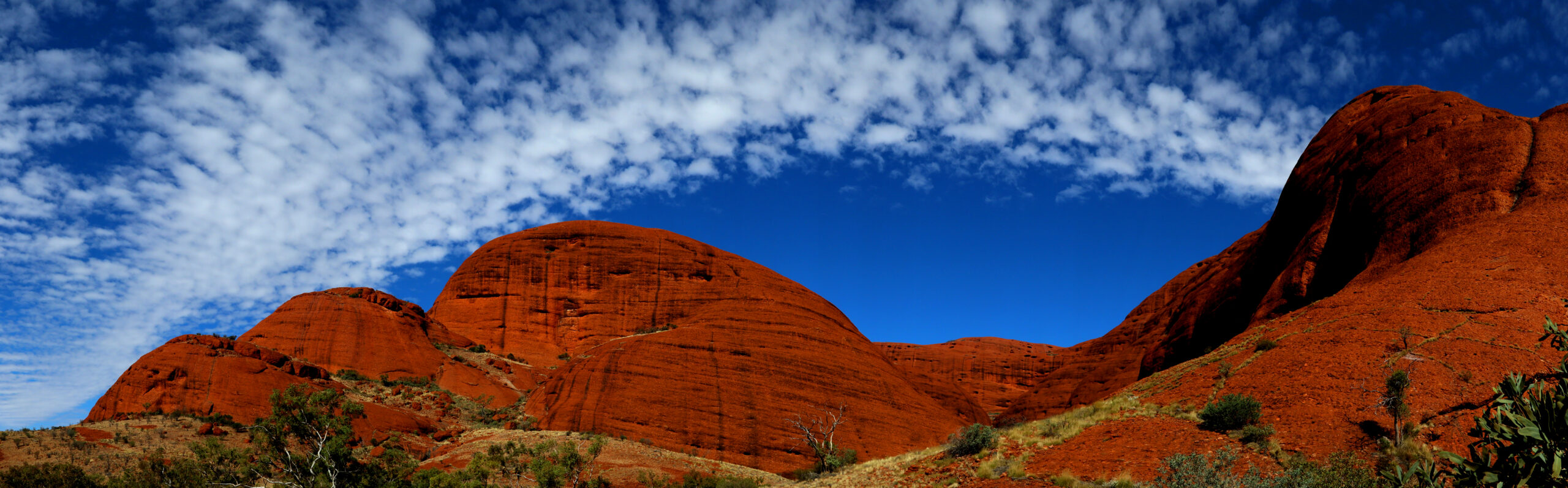
I close my eyes as we close a door on the outside, to dwell in. The red, warm, powdery earth of Kata Tjuta contrasts with the saturated cerulean sky, traversed by long, tapered cirruses. The wind blows through long gusts, comes near the skin, makes the spinifex rustle. A warmer breath rises and charges the horizon, the light tends, the smell of the petrichor becomes visible.
I'm staying for a moment in this intimate dark. Dark sand with metallic reflections, warm scum beaches of a Pacific archipelago where lava shapes the shredded ribs. The epidermis perceives the slightest variation of temperature, wave, current while the sun slowly re-installs its heat in the flesh, as it re-lights a fire under the ashes. The brief carillon of the elevator sounds and brings me back to the light of the rehabilitation centre. The elevator opens onto a mirror without detour that suddenly discovers me in a wheelchair for the first time, transient but very real.
I now find myself cut off from those sensations, from that first impulse that made me vibrate and had until then given my life a density, a way of being fully in the world. The primordial affinity with the landscape that allowed me to recover atop the red sandstone blocks of the Albarracín canyon now feels very far away. The connection with the cosmos that once carried me during open-water swims seems broken.
What remains is my oldest refuge, the place where I might still find myself: artistic practice. It too has to adapt to my present capacities, refocus, shed what is no longer necessary. It becomes a return to the sources, to the unadorned simplicity of ink and watercolour. In the intimacy of my studio and the torpor of those summer nights in 2017, a new quest begins, a new journey.
My practice is rooted in a matrix of forms and states that Japanese culture names: kata, shu-ha-ri and mushin. Together, these terms trace an ethic of doing. From budō I borrow the path more than the martial aspect: an asceticism of gesture that transmutes rigour into availability.
I repeat in order to unknot. Patient cadences, gestures taken up again, refined, pared down to silence: an obstinate liturgy in which technique becomes breath. I prepare myself so that I can forget. My kata forms a discreet architecture of rituals that make the hand a place of memory and the mind available. Through iteration, technique ceases to be a barrier; it becomes breath, a memory of the body that remembers before the mind. Then the gaze, relieved of will, can awaken as a whole.
Vertically, I move through a mineral grammar as one recites a language learned at night. Ascent after ascent, fear slowly decants, until movement, stripped of explanations, proves itself intrinsic to the body. Shu-ha-ri : obey, break, detach. At the threshold of the sky, movement is not invented; it happens.
In the liquid element, I enter as one crosses a threshold, as one enters into prayer. The cold, sharp at first, becomes clarity. Currents that initially resist become cadence. I learn the pulse of water; body and wave enter into resonance, tuned to the heartbeat of the cosmos. A supple attention no longer clings; one moves forward by attunement rather than by conquest. From this consent arises mushin : a non-adherent state of attention, a presence anchored in the instant in which discernment no longer imposes itself but simply consents.
I pursue an endogenous, Uranian alignment rather than demonstrative proof: the moment when form asserts itself through rightness rather than argument. By consenting to forces larger than oneself, the work finds its point of balance. Then everything falls into rhythm with the universe; the hand no longer commands, it listens. The gaze does not seize, it receives. When the invisible begins to weigh, form stops arguing: it anchors, and becomes the skeleton of the visible. Then the work, without emphasis, renders perceptible the order of the living, the telluric pulse.
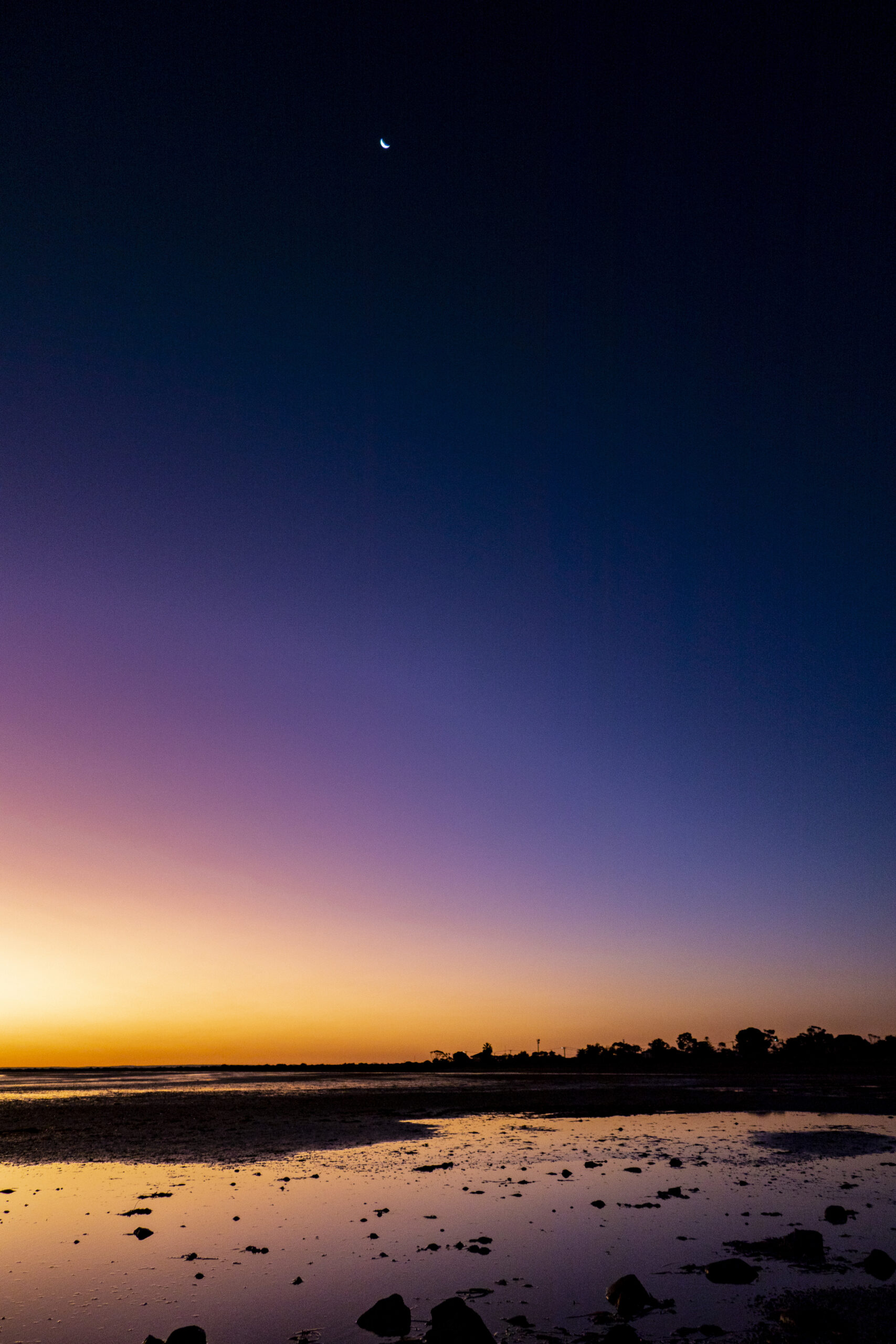
In the deepest dark of night, auroras take root.